

Technology is a part of just about every career path a student may eventually take, and tech-focused education is one of the more important parts of a modern K-12 curriculum. By getting students exposed early to emerging technologies, and AI specifically, it gives them a comfort and fluency that is hard to develop later in life. AI education is happening in K-12 learning today, and it deserves real structure behind it, not just one-off exposure.
The WEF's "Shaping the Future of Learning: Education Readiness for the Age of AI" report makes a powerful case for why that structure is so important. The report, published in June 2026, proposes an AI Readiness Framework to assess whether the proper foundations, governance, infrastructure, pedagogy, assessment, and learner experience exist before AI is incorporated into the classroom.
Its core argument is simple: without those foundations, artificial intelligence may erode rather than augment the learning, equity, and trust that education depends on. That's a structured AI learning pathway: age-appropriate, intentionally designed from step to step, not tacked on without a plan.
Why We Need to Start Tech Education Earlier
Students that learn technology concepts at an early age have something they can build upon long before they enter college or their first job. Programming, Data Science, Artificial Intelligence, Cybersecurity, and robotics are a few emerging technologies that have the potential to develop technical confidence, while simultaneously fostering critical thinking and problem-solving abilities.
Young children are curious, too, and a structured learning environment provides a constructive avenue to their curiosity. It can also set up good technology habits with regard to privacy, digital safety, judgment, and healthy skepticism. A wide foundation in tech education from an early age can help students further develop their AI and tech skills as they mature.
What Should K-12 AI Education Include?
A well-rounded K-12 AI curriculum should cover more than just how AI works. It should build foundational knowledge, practical understanding, and responsible technology habits across three key areas:
AI Fundamentals
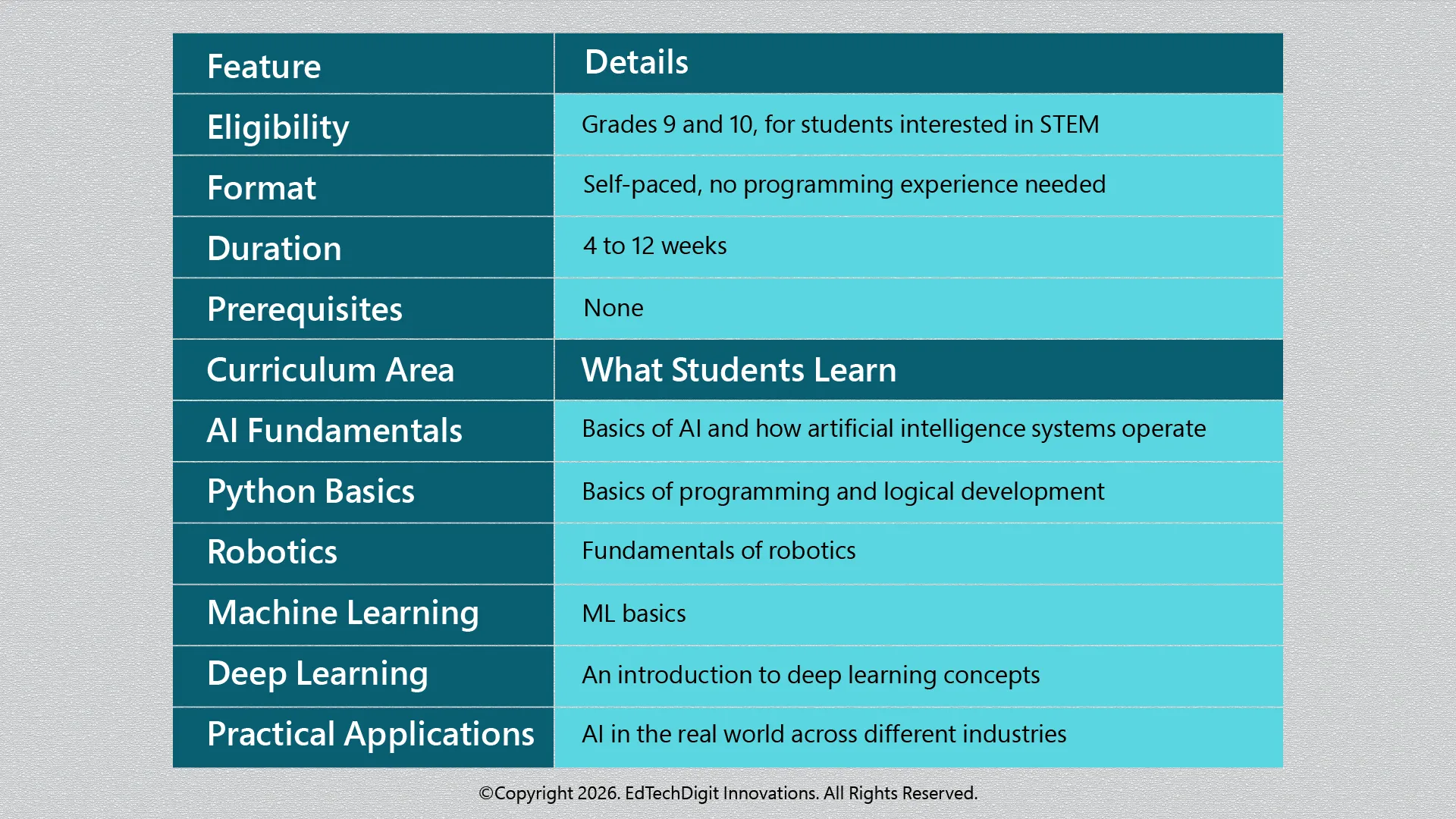
Students get a real, working understanding of what AI actually is and how artificial intelligence systems work under the surface, along with real examples of how AI shows up in everyday life, from recommendation systems to voice assistants.
Working With AI
It's about problem-solving and computational thinking, giving students a way to approach complex questions the way artificial intelligence systems do. This thinking is then brought to life and applied hands-on with an introduction to programming and tools related to AI.
AI and Society Ethics
A full K-12 AI curriculum addresses privacy, bias, safety, misinformation, and ethical AI use. Students need to be able to critically analyze the information that AI gives them, a skill that will serve them for the rest of their lives, well beyond the classroom.
A Progressive AI Pathway for High School Students
USAII®'s high school pathway builds in two structured stages, each one designed to meet students exactly where they are. It starts with a foundational program for Grades 9 and 10, then advances into applied, project-based work for Grades 11 and 12.
CAIP™ for Grades 9-10
The AI learning pathway at USAII® starts with CAIP™ (Certified Artificial Intelligence Prefect), the foundational level for STEM-oriented students in Grades 9 and 10 being introduced to these concepts for the first time in a systematic manner.
(™CAIPa) for Grades 11-12
™CAIPa (Certified Artificial Intelligence Prefect – Advanced) is a continuation of CAIP™ for students in Grades 11 and 12 who are eyeing higher education or a career in artificial inte
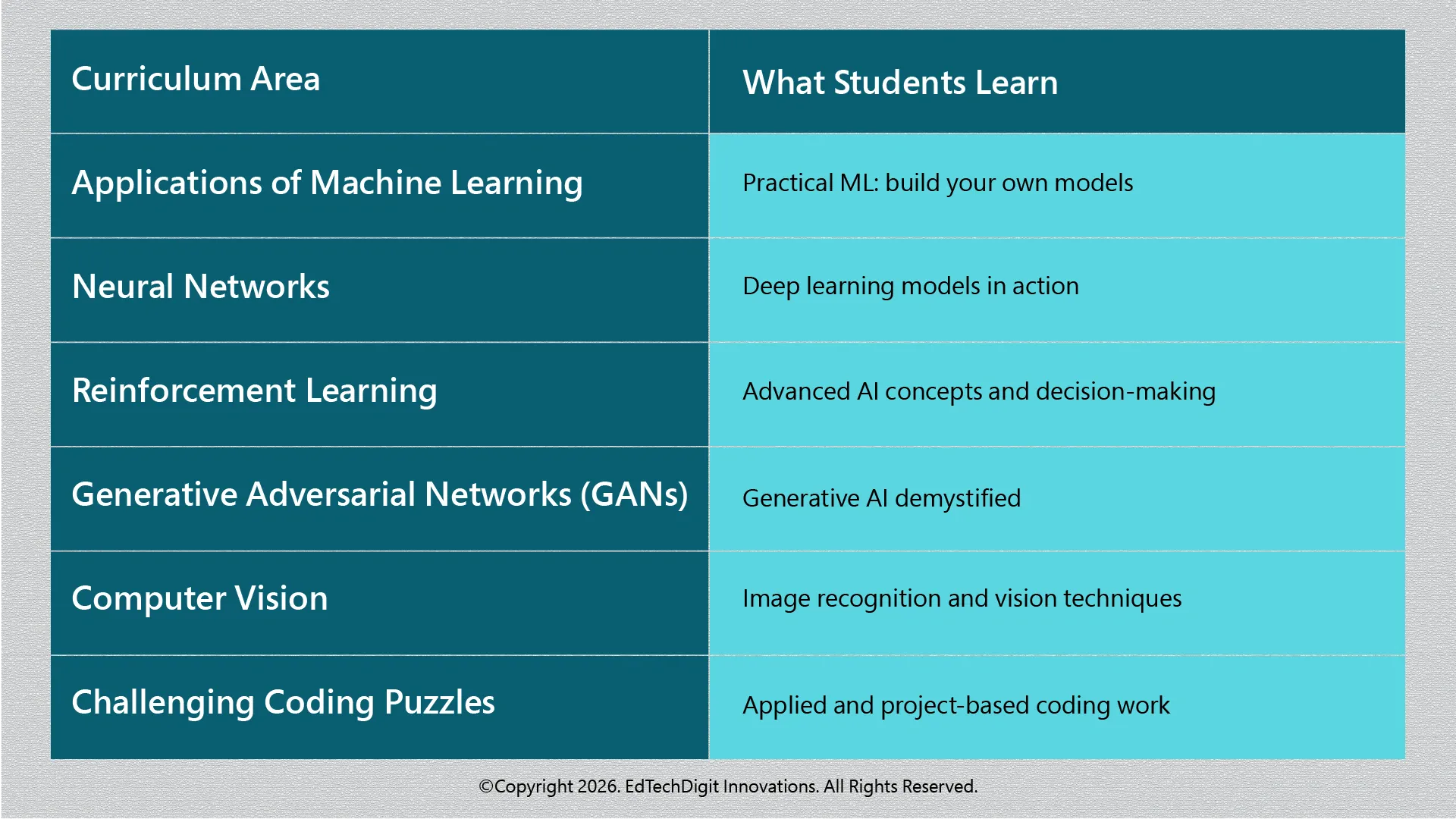
The two programs together are a real progression, not just two standalone offerings. CAIP™ develops vocabulary and familiarity with AI concepts, and CAIPa™ extends that foundation into practical, applied skill, preparing students for the technology pathways that await them in higher education and beyond.
How Institutions Can Prepare for the AI Education of the Future
K-12 institutions can add structured AI learning to their curriculum with age-appropriate programs and truly practical projects, giving students hands-on experience as well as the theory. Supporting teachers and educators is equally important, because confident and well-prepared instructors make this kind of learning land.
Projects, experimentation, and supervised practice in trying out AI helps transform abstract concepts from the textbook into something concrete. This work should be taken step by step in a thoughtful and responsible manner.
Getting Students Ready for a Tech-Driven Future
Teaching strong AI builds technical confidence, but it builds something more: critical thinking, creativity, problem-solving, and adaptability that will serve students well beyond any one technology. The goal is not to predict what job a student will end up in five or ten years from now, but to equip them with the ability to continue learning and adapting as technology keeps evolving around them.
Next Steps
Progressive technology and AI education teach students something far more valuable than piecemeal exposure to trendy tools. The CAIP™ to ™CAIPa pathway does this by taking students from the foundational knowledge of AI to truly advanced application across two stages of high school. Technology education in K-12 needs to be meaningful and develop with students, becoming more complex as the students are ready for it.
FAQs
Q. Why should students study AI before college?
A. The head start creates a familiarity and comfort level that makes advanced coursework and future careers so much more approachable when the time comes.
Q. What do Grades 9 and 10 students need to know about AI?
A. Key concepts: how AI works, applications in everyday life, basic programming, and an introduction to responsible AI use.
Q. How should schools teach about AI responsibly?
A. Schools do this well with age-appropriate curricula, well-supported teachers, and a steady focus on ethics and critical thinking.