
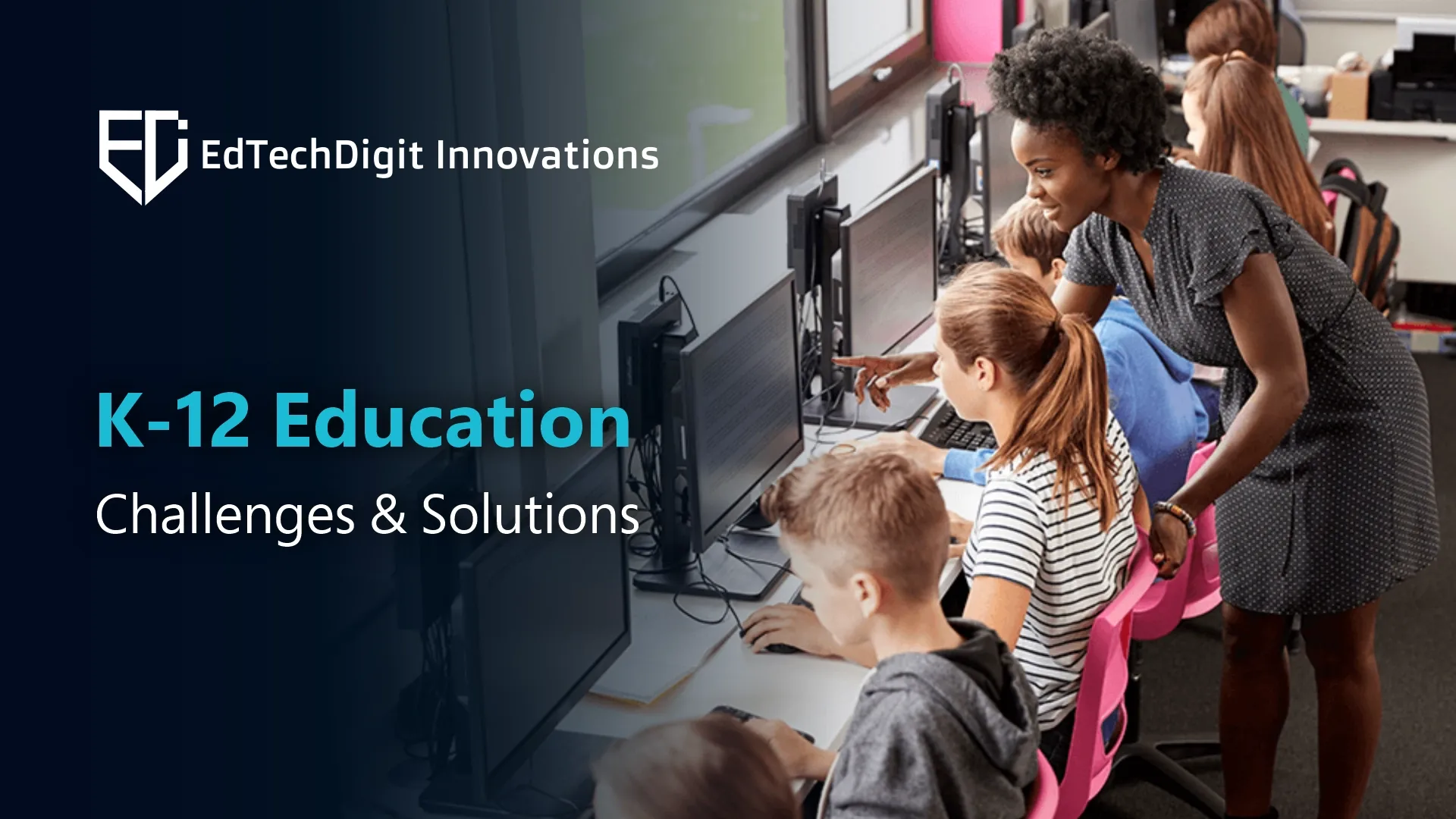
K-12 education is changing quickly, and schools are feeling the pressure from all directions. Preparing students for jobs that barely existed years ago is now part of the day-to-day work of creating better learning environments, supporting teachers through constant change, and helping students develop truly future-ready skills.
That pressure is also evident in the data. The OECD's Digital Education Outlook 2026 found that secondary teachers using generative AI tools saw a 31% reduction in the time taken to plan lessons and resources, real relief for an already stretched workforce.
But the same report warns that technology alone doesn't equal better learning without real pedagogical structure behind it. The gap between having the tools and using them well is at the heart of the challenges facing K-12 education systems today.
Where K-12 Education Systems Still Face Gaps
K-12 systems still have several gaps to address, from personalized learning and teacher readiness to effective use of technology:
Meeting Diverse Student Learning Needs
Students in classrooms are at wildly different learning levels, and one-size-fits-all instruction leaves many of them either bored or lost. To bridge this gap, real flexibility must be woven into the fabric of everyday teaching, not just the odd accommodation.
Preparing Teachers for Changing Requirements
Teaching is always evolving. New tools, new expectations, new subjects like AI literacy, and training programs often don't keep up with what classrooms actually need. Teachers learn far more on the job than any system should require of them.
Making Digital Classrooms Actually Work
Many schools have digital resources, but tools alone rarely translate into better learning. It's not that the tools exist on a device somewhere, but how thoughtfully they get used.
What Does a Strong K-12 Education System Need Today?
The foundation of a strong system is learning that is truly accessible and engaging, meeting students where they are, not assuming one size fits all. Individual support is just as important, because students have different starting points and different speeds. It's all held together by capable, tech-ready educators, because the best curriculum doesn't mean much without confident teachers to back it up.
It is not technology for technology's sake, but the effective use of digital classrooms that gives students tools that really promote learning. And all the while, students need real opportunities to build the future-ready skills that will benefit them long after graduation.
Practical Ways K-12 Education System Can Tackle These Gaps
Schools can close these gaps with practical changes in teaching, technology, and communication.
Personalize Learning With Technology
Teachers can use adaptive learning platforms and data-driven insight to customize instruction to where each student is, rather than aiming at an imaginary average student that doesn't mean anything to anyone in the classroom.
Enhance Teacher Training
It's ongoing, practical professional development, not one-off workshops, that ensures teachers are really prepared for the changing demands of the classroom, including the technology and AI literacy increasingly expected of them.
Make Digital Learning More Interactive
Interactive tools, simulations, and digital project-based work allow students to engage with technology instead of looking at screens passively, bridging the gap between having technology and using it well.
Improve School-Parent Communication
When communication is clear and consistent, it keeps parents truly informed of their child's progress and gives schools a true partner in supporting that student, instead of families having to piece things together after the fact.
How Can K-12 Education Get Ready for AI?
Reading, writing, math, that's what "future-ready" has become, and AI literacy is part of that now.
- Age-appropriate integration: AI should be embedded into K-12 learning itself, not reserved for college or a specialty elective
- Foundational AI concepts: A real understanding of how AI works, taught at a level students can actually grasp
- Responsible AI: Including privacy, bias, and ethical judgment, alongside the technical concepts
- Real problem-solving skills: The computational thinking that transfers well beyond any one tool
- Hands-on experience: Letting students work with AI tools instead of just hearing about them
- Progressive learning by age and level: A ninth grader and a graduating senior require very different depth, and structured pathways deliberately account for that.
AI Certification Programs for K-12 Students
USAII®'s AI certifications for high schoolers are built as a genuine progression, not two separate offerings bolted together. Each stage develops the skills the next one depends on.
CAIP™ for Grades 9-10
- What it is: A beginner AI certification pathway designed specifically for students in Grades 9 and 10
- Curriculum: Basics of AI, basics of Python, robotics, basics of machine learning, concepts of deep learning, practical applications of AI
- Best feature: No programming experience required, truly accessible to first-time learners in a self-paced format
- How it helps students: Builds genuine understanding of core AI concepts while developing early, practical skills, giving students real hands-on experience with the technology from the very start
™CAIPa for Grades 11-12
- What it is: The advanced program for students in Grades 11 and 12, extending directly from CAIP™
- Curriculum: Applied machine learning, neural networks, reinforcement learning, generative adversarial networks (GANs), computer vision, complex project-based coding work
- Best features: Builds naturally on CAIP™ foundations, no prerequisites, open to students from any academic stream
- How it helps students: Leads students to deeper AI concepts and hands-on applications as they approach the end of their K-12 careers, preparing them for the technology pathways and career choices waiting just beyond high school
Together, the progression from CAIP™ to ™CAIPa captures exactly what structured, age-appropriate education in AI should look like: one stage deliberately building on the last.
What Schools Should Take into Account Before Introducing New Learning Programs
Any new program should start with the age and learning level of the student in mind, and a real, teacher-ready plan to deliver it well. Curriculum alignment matters too, as programs simply don't stick when bolted onto unrelated curricula.
Practical application, accessibility, and infrastructure to support a program also deserve real consideration before adoption, as does responsible technology and AI use throughout. And maybe most important, schools need a real way to measure whether the program is actually improving student learning, rather than simply assuming that adoption itself counts as progress.
Building a More Future-Ready K-12 Learning Environment
A strong K-12 education is not about putting technology where it can go. It's about bringing effective teaching, well-chosen technology, real student engagement, and progressive skill development together into something coherent.
K-12 education has real, layered challenges, from teacher workload to uneven digital adoption to the real question of how AI fits into learning. Schools that are making real progress are those approaching these as interconnected problems, building stronger teaching, thoughtful technology use, and structured AI pathways together rather than in isolation.
Frequently Asked Questions
Q. How can school measure whether a K–12 technology program is successful?
A. Focus on learning outcomes, student engagement, teacher adoption, and measurable improvement rather than simply tracking technology usage.
Q. What role should parents play in technology-based K–12 learning?
A. Explore how parents can support responsible technology use, reinforce learning at home, and understand how digital tools are being used in the classroom.
Q. How can schools introduce AI without increasing students’ screen time?
A. Discuss using AI education through guided projects, discussions, problem-solving activities, and teacher-led learning rather than relying entirely on individual device use.