
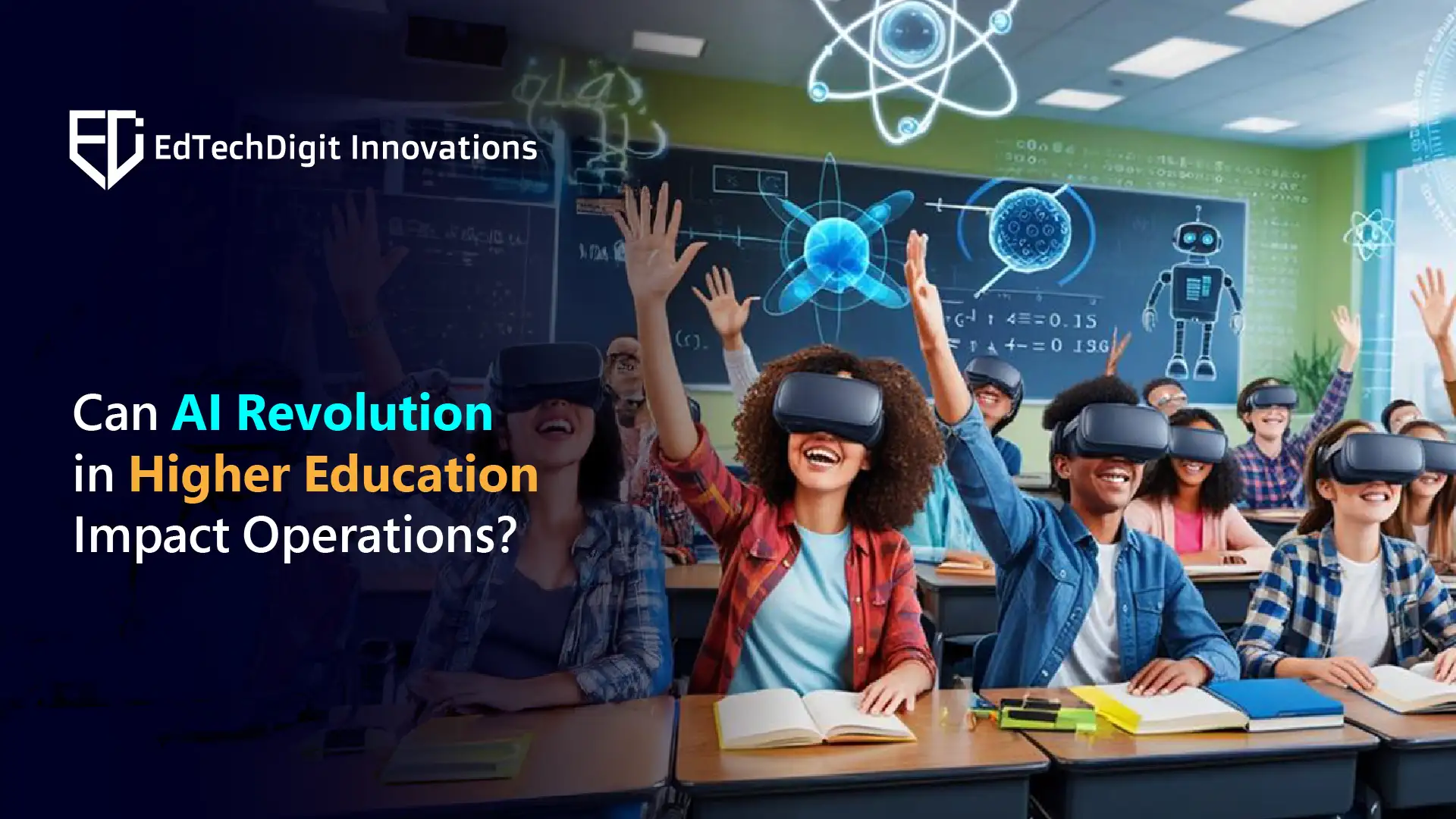
In 2026, universities and colleges worldwide are adopting AI-powered solutions to provide students with personalized learning experiences, improve their educators’ efficiency, and enhance their operations. Most importantly, they are focusing on increasing AI literacy among students and teachers. With digital transformation rapidly expanding, AI in higher education has become a strategic element for institutions.
What is AI in Higher Education?
Using AI in higher education means applying this incredible technology, including machine learning, natural language processing, predictive analytics, and automation, to improve academics and administrative processes. Did you know, as per Forbes, globally, 86% of students across 16 countries reported using AI in their studies, with over half using it weekly.
How is AI Transforming Teaching and Learning?
Now, here are some ways the AI revolution is going to influence teaching and learning experiences in 2026 and beyond.
- Personalized learning
The biggest advantage of artificial intelligence in higher education is undoubtedly a higher degree of personalization. It helps by adapting course content, assessments, and study materials based on individual student performance and learning behavior.
AI-powered educational platforms can intelligently recommend resources, identify knowledge gaps, and adjust learning paths in real time. This, in turn, helps improve student engagement and results.
- AI-Powered tutoring and student support
Another application of AI is virtual teaching assistants and AI chatbots. They can provide 24x7 support for academics and administrations. Students can use these tools to prepare for exams, explore their courses, meet deadlines, and get answers to all their education/institute-related queries.
This is very helpful in facilitating easy accessibility of information to students, which ultimately helps increase student satisfaction and also reduce faculty workload.
- AI for assessment and evaluation
Educators can also use AI in higher education for accurate assessment of students. There are numerous AI-driven assessment tools available to evaluate how students perform, not just in exams but in the classroom as well.
Automated grading systems can assess quizzes, objective exams, and short responses with greater accuracy and consistency. Moreover, learning analytics also help with formative assessments as they can easily track progress and help intervene for at-risk students early.
- Improves Educator Productivity
Not just students, AI also helps educators improve their overall productivity. For example, they can use AI-powered insights for analyzing student engagement, personalizing instruction, and also improving curriculum for the latest industry demands.
They can leverage Generative AI tools to create lesson plans, design assignments, and automate assessments. This will help them focus more on teaching and mentoring rather than doing odd repetitive jobs.
Benefits of Using AI for Administration and Operations
Apart from enhancing teaching and learning, the AI Revolution helps institutes improve their business operations and administration tasks. Here's how:
- Better admission and enrollment management
Institutions can leverage AI to analyze applications, predict student success, and reduce processing time, thereby simplifying the overall admission process. AI-powered predictive analytics helps them optimize their enrollment strategies, increase retention rates, and also improve overall student lifecycle management.
- Data-driven decision-making
Operations like financial planning, resource allocation, workforce management, etc., can also be improved by using AI in higher education. AI dashboards can provide educators with the necessary insights to make informed decisions across all departments.
- Academic research and innovation
Another big application of AI is research. AI provides the necessary tools for data analysis, pattern recognition, and predictive models that assist with automating literature reviews and analyzing huge datasets.
This results in more productive research and also encourages collaboration within higher education institutions.
What are the Challenges of Using AI in Higher Education?
- Data privacy and security – AI systems depend on huge volumes of sensitive student data, that raise concerns regarding their security and privacy.
- Bias in algorithms – If the AI models are trained on biased data, then it will result in inaccurate outcomes, which could especially impact admissions and grading.
- Implementation cost is high – Often, deploying an AI solution is a costly affair and requires a huge investment in tools, infrastructure, and skilled AI engineers.
- Faculty readiness – AI literacy among tutors and staff is again a big challenge that can affect the adoption of AI into teaching and operations.
- Ethical issues – AI-driven decisions may also lack explainability. This raises accountability and trust issues.
Final thoughts!
To sum up, the impact of artificial intelligence in higher education is transformative and long-term. It powers personalized learning, strengthens academic integrity, improves administrative operations, and also fuels research. This way, AI is redefining how education is delivered and managed.
Despite all these benefits, it is essential for universities and institutions to handle ethical challenges carefully. They must ensure that the sensitive student and institutional data are safe and secure. They should respect students' data privacy. In the long run, universities and institutions that adopt AI strategically into their operations are going to redefine the future of global higher education.
Frequently Asked Questions
- How is AI used in higher education today?
Yes, AI can be used for personalized learning, providing virtual tutoring, grades automation, plagiarism detection, and providing student support through chatbots and virtual assistants.
- Will AI replace teachers in higher education?
No. AI supports educators by automating routine tasks and providing insights, allowing faculty to focus more on teaching, mentoring, and research.
- Is AI safe and ethical for use in universities?
AI can be safe when implemented responsibly with strong data privacy measures, transparent algorithms, ethical governance, and continuous human oversight.