
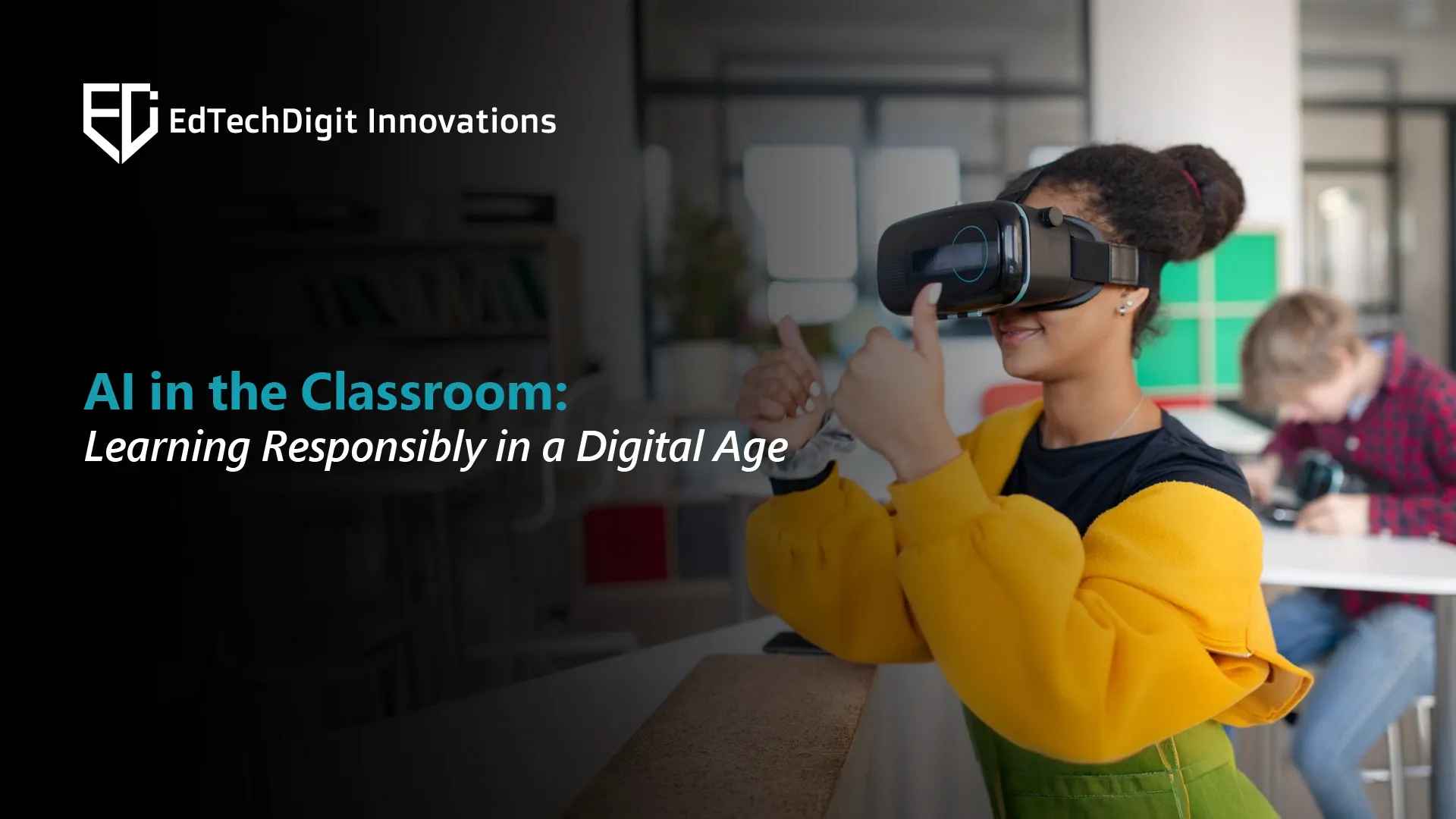
Artificial intelligence in the classroom is no longer a future concept; it has already been integrated into lesson plans and daily learning tools. This development is fast enough to make the discussion on AI in education urgent. The use of AI is not necessarily harmful in itself; it may be used to facilitate meaningful teaching and learning.
“AI has the potential to support a single teacher who is trying to generate 35 unique conversations with each student”
Bryan Brown,
Professor of Education, Stanford University
Nevertheless, when poorly planned, it may cause issues of equity, confidentiality, and academic honesty. To understand how AI can be integrated into education ethically, let us dive further into this blog.
How Is Artificial Intelligence Reshaping the Classroom Experience?
It is essential to know the changes that AI is already introducing in the classroom before getting into the world of ethics. The use of AI tools is not a new phenomenon anymore; it is widely incorporated into daily education, lesson planning, and even targeted learning support of students.
Some key ways AI is reshaping learning include:
- Lesson planning and content development: AI assists educators in making lesson plans and building questions in quizzes. It minimizes the hours taken in preparation for lessons.
- Individualized learning support: Adaptive tools dynamically alter the content depending on the performance of individual students.
- Feedback and evaluation: AI can be used to mark short responses, detect writing patterns, and offer students formative feedback between formal exams.
- Accessibility: AI-powered tools help students with learning differences through text-to-speech, real-time translation, and customized reading levels.
Real Risks of AI in Education
While AI is creating new opportunities in education, the conversation around its risks often focuses only on plagiarism, but it is more than that. Some of the key risks include the following:
- Student Data Privacy
A variety of AI applications store the user data to be able to function. Schools should be aware of the type of information collected about students, how it is utilized, and the accessibility to third parties.
- Algorithmic Bias
AI tools used for grading, feedback, or recommendations can unintentionally favor certain language styles, cultural backgrounds, or learning behaviors. This may bring some unfair advantages or disadvantages to some students, which is why it is critical to keep track of discrimination in AI systems and take necessary actions.
- Over-Reliance on Technology
Excessive use of AI to write, do research, and solve problems can undermine the skills of students to think and do tasks on their own.
- Academic Integrity and Equity
The gray area between AI assistance and AI-generated work remains unclear, and unfair access to devices and the internet may increase the learning gap.
Practical Strategies for Ethical Use of AI in Education
The application of AI in the classroom must be planned and ethical. The following strategies can be adopted to implement ethical use of AI in education:
- Set Clear AI Policies Before Students Use Tools
Schools must come up with specific guidelines on the use of AI tools among the students. Clear policies give students a clue of what to expect and how to use them in a responsible way, and avoid confusion or misuse.
- Educate Students About AI, Not With AI
The students are to be educated on how AI works and its advantages and disadvantages, as well as the ethical side of its utilization. Education in critical thinking makes them know how to operate AI responsibly, rather than blindly executing tasks through AI
- Build AI Knowledge Among Educators
Professional development programs and practical experience with AI tools can help teachers develop more knowledge about AI. Information can assist them in applying AI in practice and predicting the risks, such as bias or misuse.
- Strengthen AI Literacy Through Certifications
AI certifications can enable students to know how AI works, its ethical significance, and the relevance of data privacy. These programs educate learners to be responsible when using AI, enhance their critical thinking and digital literacy to apply them within and outside the classroom.
- Check Data Privacy of All Tool
Schools must examine the manner in which an AI platform gathers, retains, and utilizes student data before adopting any AI platform. Those tools that fail to keep privacy or provide information to third parties must be avoided in order to provide safe and secure learning environments.
- Keep Human Judgment in All Significant Decisions
Even though AI may give insights and recommendations, it should be teachers who are the ultimate decision-makers in student learning. Having human guidance makes the instruction remain personalized and equal correspond to the needs of the students.
A Responsible Way Forward!
The use of AI in education has a bright future, yet only under the condition of responsible use can it be beneficial. Educators lead and teach with human considerations and moral leadership, while students learn to use AI thoughtfully, understanding its limits and potential.
Through AI literacy, avoiding ambiguous policies, and focusing on fairness and privacy, schools will be able to make sure that AI positively impacts learning and allows students to be prepared for a technology-driven future.
FAQs
How can students with various learning styles benefit from AI?
AI can modify lessons for kinesthetic, visual, or auditory learners, offering tailored practice, interactive materials, and individualized explanations.
Which skills help teachers work effectively with AI?
AI literacy, prompt writing, and evaluating AI-generated content are key skills.
How can teachers ensure AI tools are safe for students?
Teachers should check the data privacy policies of any AI tool, avoid platforms that compromise student data, and maintain human oversight in all major learning decisions.